Trending

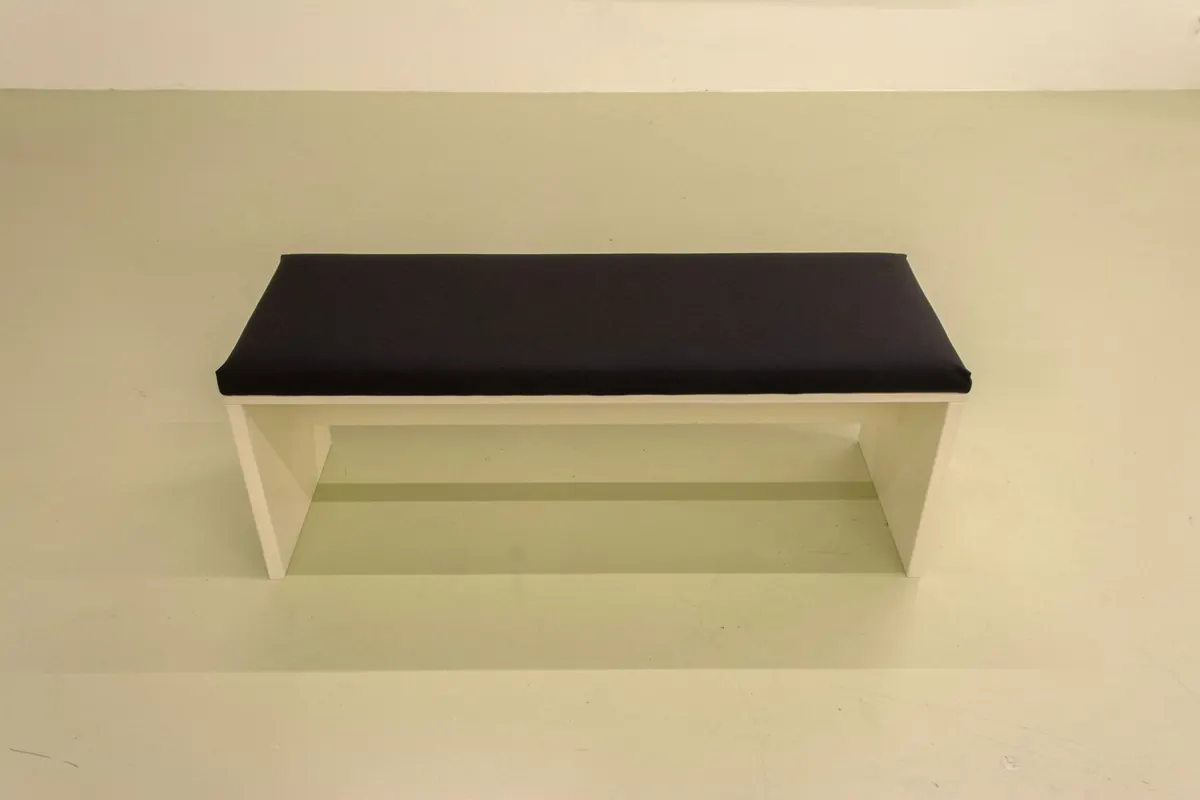
A bench without a cushion is a bench you use for two minutes and then abandon. The slats press into your legs, cold metal takes the warmth out of you, and the kitchen chair starts looking inviting. Adding something soft is the easy part. Choosing between a bench cushion and a bench pad is where most people hesitate, because the two sit side by side in the same catalogue with similar photographs and quite different jobs.
A bench cushion is the thicker option: usually 5–10 cm of foam, often with a piped edge, sometimes tufted, sold as one long seat cushion or as two or three sections. A bench pad is slimmer, typically 2.5–5 cm, and usually arrives as a single rectangle with ties or elastic loops at the back.
Retailers mix the words about, so ignore the name and read the specification. The two numbers that matter are filling thickness and how the pad is fixed to the bench. Colour, piping and pattern are decoration.
Thickness is the first thing your body notices and the last thing you should guess at. A thin pad on a wooden bench can feel surprisingly civil for a quick lunch, while a thick cushion on a shallow bench can make you feel like you are perched on a loaf of bread. The right number depends on how long you sit, how deep the bench is, and whether a table is involved.
Density matters as much as depth. A firm, high-density foam at 5 cm outlasts a soft 8 cm pad that flattens within a season and needs plumping every time you stand up. If you can press the foam between your fingers and it collapses to nothing, it will do the same under your weight. Look for terms like high-density, firm, or open-cell rather than vague promises of “extra softness.”
Check bench depth before going thick. Most benches have a seat around 45–50 cm deep, and a 10 cm cushion eats a fifth of it. If the bench sits under a table, the seat height needs to leave your thighs clear, so measure your knee height when seated and subtract. Watch the slats as well: wide gaps in thin timber let soft foam dip into the void. A denser pad, or a thin ply base beneath the cushion, solves it.
This is the step that turns a good purchase into a disappointing one. Take five minutes with a tape measure.
Write the numbers down and compare them with the product listing before you order. A cushion that is 5 cm too wide will buckle; one that is 5 cm too narrow will slide. If you are between sizes, size down for a pad and size up for a cushion only if the bench has no arms and you like a slight overhang.
Outdoor comfort is as much about what happens after a rain shower as it is about foam. A cushion that feels wonderful in July can turn into a soggy sponge by October if the fabric and filling are wrong. For year-round use, look for covers that resist fading, mildew and water, and fillings that drain rather than hold moisture.
For the filling, open-cell foam drains and dries faster than memory foam, which can trap water and stay damp for days. Closed-cell foam is firmer and more water-resistant, but less breathable. Many good outdoor cushions use a wrapped foam core with a water-resistant liner, which balances comfort and weather resistance. If the cushion does not have a removable, washable cover, think twice—especially if it will live outside.
A pad that slides forward every time you stand up is a pad you will eventually hate. Attachment is the quiet difference between a bench that looks styled and a bench that actually works. Check what your bench offers: slats, rails, legs, or a smooth solid seat. Then match the fixing to it.
If your bench has no slats or rails to tie to, a non-slip mat or a thin rubber grid under the pad can make a surprising difference.
Choose a bench cushion if you use the bench as a sofa: long conversations, afternoon naps, reading with your feet up. The extra thickness protects your hips and lower back, and a sectional cushion can be rotated to even out wear. It is also the better choice for metal benches, which feel cold for much of the year, and for benches with wide slats that need a substantial barrier.
Choose a bench pad if the bench is primarily a perch: a spot for pulling on boots, a place for guests to set a plate, a seat at a garden table where you sit upright and close to your food. Pads are lighter, cheaper, easier to store and less likely to crowd a dining table. They also dry faster, which matters in damp climates.
If you sit for more than 20 minutes at a time, buy the thickest cushion your bench depth and table height allow. If you mostly perch, a well-fitted pad is lighter, cheaper, and easier to store.
Even the best outdoor cushion will not last if it is ignored. A little routine care adds years to the foam and keeps the fabric looking fresh.
In winter, bring cushions inside if you can. If the bench stays out, stand the cushion on its edge rather than leaving it flat, so water drains instead of pooling. A simple outdoor storage box near the bench makes daily tidying realistic.
Neither a bench cushion nor a bench pad is universally better. The cushion wins on comfort, warmth and long lounging sessions. The pad wins on simplicity, breathability and budget. For year-round outdoor comfort, the smartest choice is usually the one that matches how you actually use the bench—not the one that looks best in a photograph.
Measure first, match thickness to use, choose weather-ready materials, and fix the thing to the bench. Do that, and your bench stops being a decorative piece and becomes the seat everyone reaches for—from the first coffee of spring to the last glass of wine in autumn.
Photo: Jan van der Wolf / Pexels